
SDG 9: Industry,Innovation and Infrastructure
Phoenicia University advances SDG 9 (Industry, Innovation and Infrastructure) through applied engineering research, strategic technology partnerships, and investment in innovation infrastructure. From faculty-led research on sustainable materials and renewable energy to the Phoenicia University Incubator's support for student and community entrepreneurs, PU works to translate research and ideas into practical, scalable innovation outcomes.
Research, Innovation, and Applied Engineering
Innovation in Sustainable Building Materials
Dr. Mariam Itani, Coordinator of the Mechanical Engineering Department, led research on an innovative composite material — Capric Acid/Hydrophobic Expanded Perlite integrated with Phase Change Materials (CAHEP-PCM) — designed to improve thermal storage and energy efficiency in building envelopes. The research addressed common limitations of conventional phase change materials, such as leakage and unstable heat transfer, and evaluated the composite's thermal performance and cost-effectiveness for Lebanon's subtropical climate. The study was presented by senior Mechanical Engineering student Khadija Ramadan at the 2024 ASHRAE Sixth International Conference on Efficient Building Design, reflecting PU's contribution to innovation in sustainable construction materials and its integration of student researchers into applied engineering research.
Innovative Energy-Efficient Building Research at ASHRAE 2024 | Phoenicia University
Applied Engineering Research and Innovation – Faculty Recognition
Dr. Kamel Abou Ghali, Interim Dean of the College of Engineering at Phoenicia University, brings a strong applied research background to the university's innovation profile. He was recognized among the World's Top 2% Scientists in the 2025 Stanford-Elsevier global ranking, reflecting a sustained record of high-impact research in engineering. As Interim Dean, his research background and academic leadership contribute to strengthening Phoenicia University's applied engineering and innovation capacity under SDG9.
International Research Collaboration on Sustainable Materials — 2024
In 2024, Dr. Kamel Bou Hamdan, a faculty member in PU's College of Engineering, contributed to an international research collaboration examining green, environmentally sustainable alternatives to synthetic chemicals used in oil recovery — work submitted for peer review in April 2024 alongside co-authors from Beirut Arab University and Heriot-Watt University (UK). The resulting study, "Advancements in Green Materials for Chemical Enhanced Oil Recovery: A Review," was independently classified by Heriot-Watt's research repository as contributing to SDG9 (Industry, Innovation and Infrastructure), reflecting PU's engagement in international academic collaboration on sustainability-relevant research.
Dr. Kamel Bou Hamdan Co-Authors Study on Green Materials in Oil Recovery | Phoenicia University
Partnership for Technology and Innovation
Ministry of State for Technology and Artificial Intelligence and Phoenicia University Sign MoU on Technology and AI
In July 2026, Phoenicia University signed a Memorandum of Understanding with the Ministry of State for Information Technology and Artificial Intelligence, establishing a framework for collaboration to advance national priorities in artificial intelligence, digital transformation, and emerging technologies.
Under the agreement, the university and Ministry agreed to collaborate on several fronts: joint research and technical studies on AI and emerging technologies; training programs to build digital skills for public sector staff and students; expert advisory support from university faculty on Ministry technology strategy; hands-on projects for students and researchers based on real Ministry challenges; and knowledge-sharing events such as conferences and seminars.
Each party designated a formal focal point to coordinate implementation, reflecting a structured and ongoing institutional partnership rather than a one-off engagement. This agreement demonstrates PU's role in linking academic research capacity directly to national technology policy and industry-relevant innovation.
Infrastructure Investment for Innovation
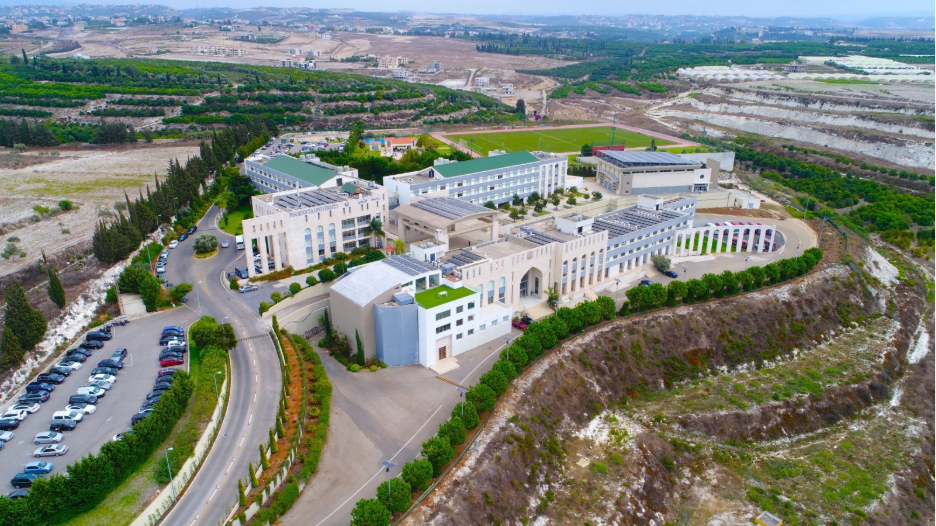
As part of its broader sustainability strategy, Phoenicia University has invested in on-campus renewable energy infrastructure, including a rooftop solar PV plant comprising 633 panels with a total capacity of 376.635 kW — reducing dependence on conventional energy sources and supporting the university's operational resilience. This investment reflects PU's approach to building modern, resilient campus infrastructure, complemented by regular environmental and energy audits that inform continuous infrastructure upgrades and efficiency improvements.
Phoenicia University Incubator (PUI)
PU further supports innovation infrastructure through the Phoenicia University Incubator (PUI), which provides start-ups with workspace, mentorship, and access to specialized lab equipment. Through the university's annual Idea Fair, promising ventures — including clean-energy and low-carbon technology ideas — are identified and channeled into the Incubator's support pathway, reinforcing PU's role in building the physical and institutional infrastructure needed to convert research and entrepreneurship into practical innovation outcomes.
The 2024 Idea Fair welcomed students and young innovators to pitch business ideas and inventions to a panel of faculty and industry mentors. Among the ten ideas presented was a clean electricity solution harnessing ocean wave power, which was selected to join PUI's incubation track for structured mentorship and support in developing the concept into a viable venture.
The Idea Fair continues to serve as a key feeder into PUI's incubation pipeline, connecting innovators with the mentorship and support needed to move ideas from concept toward sustainable, innovation-driven ventures.
Incubator | Phoenicia University
Idea Fair: PU Students and Community Pitching Platform | Phoenicia University
Conclusion
Through its research output, institutional partnerships, and investment in innovation infrastructure — including the PU Incubator and on-campus renewable energy systems — Phoenicia University continues to strengthen the link between academic research and real-world industrial and technological progress, reinforcing its role as a driver of innovation in Lebanon.
Colleges
Contact info
Phoenicia University
Main Campus
District of Zahrani
South Lebanon
Tel.: +961 7 420 720
E-mail: info@pu.edu.lb
Main Campus
District of Zahrani
South Lebanon
Tel.: +961 7 420 720
E-mail: info@pu.edu.lb