
SDG 6: Clean Water and Sanitation
Access to clean water and sanitation is one of the most fundamental pillars of human dignity, health, and sustainable development, yet it remains out of reach for millions of people worldwide. SDG 6 calls for ensuring the availability and sustainable management of water and sanitation for all. Recognizing the importance of this goal, Phoenicia University (PU) seeks to contribute to this global effort by fostering awareness and understanding of water and sanitation issues among its community, encouraging research and academic engagement with the topic, and supporting the broader mission of building a more sustainable and equitable future. Through such efforts, the university aims to play its part in advancing the principles of SDG 6 and preparing students and the community to think critically about the challenges and solutions surrounding global water security.
This commitment begins with responsible internal water management. Facilities Management is responsible for the measurement and management of water consumption and expenditure across all university campuses and buildings. This is tracked through utility invoices, water meter readings, and internal facilities reports, which are consolidated and reviewed annually by Facilities Management. The university's water supply is sourced primarily from on-site groundwater wells, with additional sources including the municipal water network and rainwater reuse.
Supporting this internal water management is PU's investment in the technical expertise of its own staff. In February 2020, Ms. Amira Fakih, a member of PU's staff since 2015, obtained a Professional Diploma in Green Technologies, with a specialization in Water, through a joint academic program between the American University of Beirut (AUB), the Lebanese American University (LAU), and the American University in Cairo (AUC). By supporting staff in pursuing specialized, cross-institutional training in sustainable water technologies, PU strengthens its internal capacity to deliver water-related services, research, and outreach — reflecting SDG 6's call to expand capacity-building support for water- and sanitation-related technologies and programs.
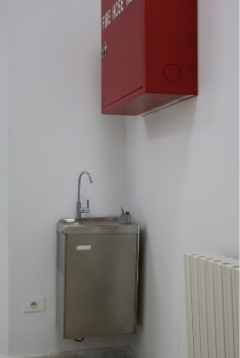
Building on this responsible sourcing, PU also ensures equitable access to safe drinking water across its campus community. The university provides free drinking water through a bottled water dispenser located in the cafeteria, accessible to all employees and visitors, as well as through treated drinking water supplied via fountains distributed across campus, available to students.
Beyond ensuring access on campus, PU extends its commitment to water security into the wider community through educational opportunities focused on good water management. This is achieved through a combination of practical services, public outreach, and academic research. In response to Lebanon's ongoing water contamination crisis, PU's Civil and Environmental Engineering Department, in collaboration with the university's Laboratories Department, offers a water-quality testing service that examines bacteriological parameters such as Cholera, Fecal Coliform, and Total Coliform. Beyond testing alone, the service helps the private sector understand and interpret water quality results, enabling more informed and effective responses to contamination, thereby contributing to national water security efforts and supporting evidence-based decision-making within the wider community.
Water Quality Testing | Phoenicia University
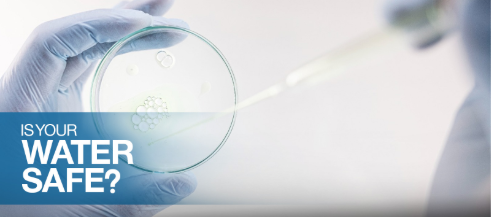
This initiative is not a one-time effort but an ongoing commitment, with the service being offered again this year, reaffirming the university's continued dedication to supporting water quality awareness and management within the community.
Complementing this technical service, the university also engages the public directly through educational events. On March 28, 2024, Dr. Hamdan Hamdan delivered a free public lecture on water microbiology, open to students, staff, and members of the wider community interested in public health, environmental safety, and water quality. Supported by PU's water testing facility, the session explained water-borne disease mechanisms and water treatment science in an accessible, free-of-charge format, bringing specialized scientific knowledge to a broader public audience.
Water Microbiology Awareness Session | Phoenicia University
In addition to these community-facing initiatives, PU contributes to the global body of knowledge on water management through academic research, including work on wastewater treatment technologies and digital integration, examining pathways toward circularity and sustainability in the field. https://doi.org/10.1016/j.jece.2026.121718
PU-LWAH also collaborated with the Sea Without Borders Association / Lebanese Diving Center to deliver an environmental awareness lecture titled "Keep Our Ocean Clean" on Wednesday, January 21, 2026. Targeting Grade 3 students and students with learning difficulties (Levels II and III), the session used visual and interactive methods to explain the importance of marine ecosystems, the dangers of ocean pollution, and the impact of individual behaviors on marine life. By extending this outreach to younger learners and students with additional needs, the initiative reinforced the idea that protecting water-related ecosystems — from groundwater to the sea — depends on building awareness across all ages and abilities.
Educational Resources
PU further supports water and sanitation awareness through dedicated educational course material developed for its students:
Water Quality and Water Conservation — Educational course material covering the sources and causes of water pollution, the parameters and methods used to test water quality, and practical approaches to water conservation, developed to build technical literacy on water security among PU students.
Water Quality and Water Conservation | Phoenicia University
Phoenicia University's CENG219 – Special Topics in Civil Engineering, a technical elective for senior Civil Engineering students, embeds water sustainability directly into the curriculum. Centered on the LEED rating system, the course includes a dedicated Water Efficiency module covering strategies for reducing potable water consumption, improving water-use efficiency, promoting water reuse, and implementing sustainable water management practices in buildings. Through this coursework, students graduate with practical knowledge of responsible water use and sustainable water resource management in the built environment — directly equipping future engineers to advance SDG 6 through their professional practice.
Colleges
Contact info
Phoenicia University
Main Campus
District of Zahrani
South Lebanon
Tel.: +961 7 420 720
E-mail: info@pu.edu.lb
Main Campus
District of Zahrani
South Lebanon
Tel.: +961 7 420 720
E-mail: info@pu.edu.lb