

Faculty Spotlight

Faculty Spotlight | Dr. Haytham M. Dbouk
Dr. Haytham M. Dbouk, Professor of Electrical and Communication Engineering at Phoenicia University (PU) since 2023 and Founder & CEO of Innovating Green Technology (IGT), contributes to international research advancing decentralized renewable energy, intelligent energy-management technologies, and sustainable electricity systems.
Among his research collaborations is “From Off-grid Solar PV Systems to Microgrids in Lebanon” (2024–2026), funded by the Templeton World Charity Foundation and led by the American University of Beirut (AUB) under Dr. Majd Olleik. The collaboration involves researchers from AUB, Technische Universität Wien (TU Wien), the Norwegian University of Science and Technology (NTNU), and HEC Montréal, with IGT serving as the project’s Lebanese industrial research and implementation partner.
The project examines how decentralized solar photovoltaic systems, energy storage, and innovative electricity-market structures can improve electricity access, affordability, efficiency, and resilience in Lebanon and comparable contexts. Its research directly supports SDG 7 – Affordable and Clean Energy, with broader relevance to SDGs 9, 11, and 13.
Scientific and Technical Contributions
Through his scientific and technical involvement, Dr. Dbouk helps connect interdisciplinary academic research with practical energy-system applications, field measurements, and empirical data generation. His contribution draws on his academic expertise and leadership of IGT’s independent industrial research and technological development activities.
Industrial Implementation and Field Data Acquisition
As the project’s industrial partner, IGT carried out onsite engineering and field data-acquisition activities, including monitoring-infrastructure deployment, smart metering, electricity supply-and-demand measurements, and operational data logging.
These activities incorporated IGT Optima, IGT’s independently developed intelligent energy-monitoring and management platform, combining edge computing, power metering, and communication technologies to support reliable field data collection.
The publicly released field dataset, identified by its Zenodo record collected by IGT, covers three households, three industrial units, and a municipal building in South Lebanon. It supports research into electricity consumption, solar PV utilization, energy-system performance, and decentralized electricity-market optimization.
Nationwide Household Survey and Open Research Data
The collaboration also generated a nationwide survey comprising 1,006 household responses, documenting electricity demand patterns, energy sources, household expenditures, and unmet electricity demand. Dr. Dbouk is formally identified as a data manager in both public Zenodo records, alongside the respective collaborating researchers. The datasets provide open resources for further academic analysis, energy-system planning, and sustainability research.
Related Publications
Zwickl-Bernhard, S., Neumann, A. F., Olleik, M., & Dbouk, H. M. (2025). Market Organization in Low-Income Countries’ Microgrids: Insights From Electricity Demand Elasticity and Game-Theory Optimization. Case Study: Lebanon. IEEE Transactions on Energy Markets, Policy and Regulation. Peer-reviewed journal article; Dr. Dbouk’s published affiliation: IGT. DOI
Olleik, M., Dbouk, H. M., Neumann, A., Bou Gebrael, E., & Zwickl-Bernhard, S. (2026). Household coping mechanisms under grid failure: Evidence from a high electrification context in Lebanon. Research preprint; Dr. Dbouk’s listed affiliations: Phoenicia University and IGT. arXiv:2606.17807
Through Dr. Dbouk’s individual faculty research engagement and appropriately affiliated scholarly outputs, these activities contribute to PU’s research visibility and sustainability-oriented academic profile.
Supporting References and Evidence
Official Project Documentation
- Templeton World Charity Foundation – Official project record
- American University of Beirut – Project announcement and industrial partnership
Openly Published Datasets
Global Recognitions
- MIT Technology Review – Innovators Under 35 (2019)
- Forbes Middle East – 30 Under 30 (2024)
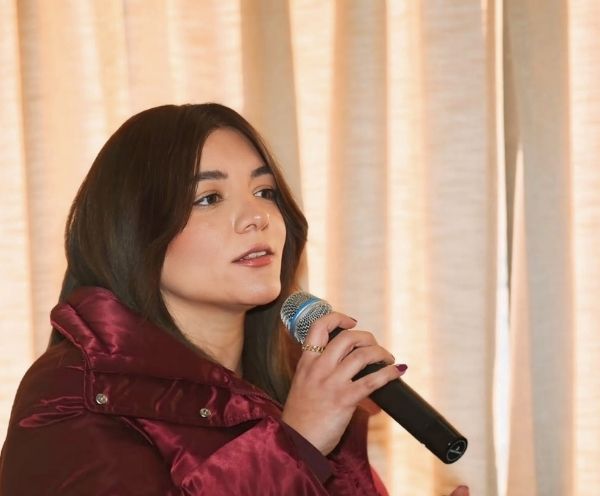
Local Initiative to Meet Urgent Needs in Times of Crisis
Dr. Walaa Harb a faculty member at Phoenicia University since 2021, serves as Vice President of MIDAL since 2024 to present, a Lebanese non-profit based in South Lebanon. MIDAL promotes sustainable development, with a focus on women’s empowerment, community resilience, and youth capacity-building.
MIDAL supported affected communities with essential medicines and food, working in collaboration with municipalities across the South. Dr. Walaa worked closely with mayors and municipal council members to identify urgent needs, set priorities and shape the local response, contributing to poverty-focused decision-making at municipal level. She sees this work as central to sustainable development: communities cannot recover without access to essential resources, health support and basic needs, and civil society organizations working alongside local authorities to make that recovery possible.
Through this partnership, she contributed to a January 2025 panel on women’s role in post-war recovery and reconstruction, and to a March 2025 entrepreneurship and digital-skills event, which PU students attended, supporting women’s participation in the digital economy.
This experience shapes Dr. Walaa's teaching at Phoenicia University. In public speaking, journalism, social media and media literacy courses, real examples from crisis response show students how reliable information help vulnerable families reach food, medicine and other essential support. Students are encouraged to connect theory with real-world challenges and to consider how their future careers can contribute to the SDGs, particularly community resilience, gender equality, education, decent work, and responsible communication.
National Initiative to Reduce Health-Driven Poverty
Dr. Zahi Abdel Sater, Interim Dean of the College of Public Health at Phoenicia University, has served, from 2024 to present, as Scientific and Technical Lead on the initiative "Enhancing Access to Cancer Medicines through Innovative Private Insurance Plans". The initiative was conducted in multiple stages, including stakeholder discussions with pharmaceutical executives, policy makers and Third-Party Administrators on introducing coverage for oral oncology medication for the privately insured population. This culminated in a white paper and, most recently, an open-access article in Frontiers in Oncology as the first longitudinal, claims-based characterization of cancer care costs in Lebanon's privately insured population (doi.org/10.3389/fonc.2026.1924237). The findings will be shared with the Lebanese Ministry of Public Health and national insurers, recommending a dedicated oncology benefit design aimed at eliminating out-of-pocket costs for outpatient oncology medicines among Lebanese cancer patients.
This initiative addresses poverty by tackling the financial hardship cancer imposes on Lebanese households at a time when out-of-pocket payments exceed 85% of national health expenditure. Analysis of 16,617 patients and USD 239.9 million of claims across seven years showed that cost concentrates sharply, whereby a high-cost cohort of 285 patients (1.7%) accounted for 23% of all spend, and cancer medicines drove 37.8% of expenditure despite surgery leading by patient volume. Because outpatient oncology medicines fall outside most Lebanese insurance plans, patients meet those costs themselves or are admitted to hospital unnecessarily to access covered treatment. Modelling conducted indicates that extending coverage to oral oncology treatment would modestly raise cost per insured member per year, representing a low-cost, high-impact intervention against health-driven poverty.
Dr. Abdel Sater also co-authored and contributed to an international study, “Review of Trauma Data in Conflict Middle East and North Africa Nations: An Appeal for Registry Sharing,” published in the Journal of Surgical Research (June 2025). The study was a collaboration between Duke University, the American University of Beirut and Phoenicia University’s College of Public Health. It mapped civilian trauma data across Lebanon, Gaza and the West Bank, Syria, Iraq, Yemen and Libya.
The team found that these six countries hold only 11% of the trauma registries on their own civilians, while 75% sit in the United States. The study calls for cross-border registry sharing.

Regional and National Poverty Policy Initiative – Dr. Hassan Hamie
Since 2018, Dr. Hassan Hamie has been contributing to teaching and academic activities at Phoenicia University, primarily in the field of engineering. Alongside his academic engagement, since joining the United Nations Economic and Social Commission for Western Asia (ESCWA) in 2021, Dr. Hamie has served in various research and policy roles, including Research Assistant and Associate Social Affairs Officer, contributing to regional initiatives on social protection and poverty reduction. His work involves supporting the design and implementation of social development strategies across multiple Arab States, in collaboration with national ministries, regional stakeholders, and development partners.
Through his research and social affairs roles, he analyses household survey and administrative data across Arab States to measure poverty, inequality, and social protection, supporting monitoring of SDG 1 (No Poverty) and SDG 10 (Reduced Inequalities).
Dr. Hamie’s engagement includes analysing large household survey datasets (HIECS, MICS, DHS), social registries, and administrative sources across multiple countries to assess income distribution, welfare poverty, and the fiscal impact of social programmes. He also contributes to capacity development through training and workshops for national statisticians and policy analysts, promoting international measurement standards and good practice in data collection, validation, and reporting.
While his professional work focuses on social and economic development policy, his academic contributions at Phoenicia University are centered on engineering education and student capacity development. Through teaching, mentoring, and knowledge sharing, he contributes to the University’s commitment to advancing high-quality education and fostering the technical competencies required for sustainable development and innovation. His engagement in regional development initiatives brings valuable perspectives on inclusive development, social protection, and evidence-based policymaking to the broader academic community, reflecting Phoenicia University’s commitment to supporting the Sustainable Development Goals, particularly SDG 1 and SDG 10.
Colleges
Contact info
Phoenicia University
Main Campus
District of Zahrani
South Lebanon
Tel.: +961 7 420 720
E-mail: info@pu.edu.lb
Main Campus
District of Zahrani
South Lebanon
Tel.: +961 7 420 720
E-mail: info@pu.edu.lb